


Ischemic Stroke and Hemorrhagic Stroke
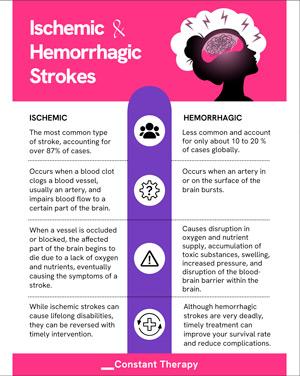
Strokes are classified into two major types depending on the cause or the mechanism by which they occur. These include:
Ischemic Stroke
Ischemic stroke is the most common type of stroke, accounting for over 87% of cases (5). It occurs when a blood clot clogs a blood vessel, usually an artery, and impairs blood flow to a certain part of the brain. This clot can be formed within the blood vessels in the brain or may be dislodged from a different part of the body and travel to a vessel within the brain. When a vessel is occluded or blocked, the affected part of the brain begins to die due to a lack of oxygen and nutrients. Then it causes symptoms of a stroke depending on the affected part of the brain.
While ischemic strokes can cause lifelong disabilities, they can be reversed with timely intervention. Your GP or attending physician can offer certain medications that help to dissolve the clot and restore blood flow to that brain part. However, this must be done within 4.5 hours after you begin feeling the symptoms of a stroke.
Hemorrhagic Stroke
Hemorrhagic strokes are less common and account for only about 10 to 20 % of cases globally. However, they are very dangerous and have high mortality rates. Hemorrhagic stroke occurs when an artery in or on the surface of the brain bursts. This causes disruption in oxygen and nutrient supply, accumulation of toxic substances, swelling, increased pressure, and disruption of the blood-brain barrier within the brain. All these result in severe stroke symptoms and, in several cases, death.
Although hemorrhagic strokes are very deadly, timely treatment can improve your survival rate and reduce complications.
Transient Ischemic Attack
A transient ischemic attack (TIA), also called a ‘mini-stroke,’ happens when a blood clot temporarily or briefly blocks an artery in the brain. The symptoms usually last a short time, ranging from a few minutes to some hours. However, these symptoms resolve within a day.
Get the guide
Latest from the Brainwire blog

Chromebooks and Constant Therapy: a winning combination!
Chromebooks works well with Constant Therapy and offer a user-friendly experience for your speech, language and cognitive therapy. Get step-by-step instructions on how to get started.

New study finds Constant Therapy feasible treatment for Alzheimer’s Disease
Time to read: 5 minutes For the more than 55 million people worldwide living with Alzheimer’s Disease—including some 10 percent of Americans over the age of 65—it has never been more urgent to find Alzheimer’s Disease treatments that help preserve cognitive abilities...

Optimizing your homework environment: 5 tips to maximize your Constant Therapy practice
Time is precious, and with so much going on in the world we have to make the most of the time we have available! That goes for spending time with family and friends, doing the hobbies that bring you joy, and of course, your Constant Therapy practice, which makes doing...
Watch how-to videos
FOR PATIENTS
$
Need help? Contact the Support team
$
